Our friend Latoola, recently contacted us with an interesting story about her latest cooking creation.
Latoola's annual Thanksgiving dinner must include apple, pumpkin, and pecan pies. Her husband insists on it even though she protests that only the apple pie typically gets eaten, and she tosses the bulk of the pumpkin and pecan pies into the trash after giving him a week to refuse any more desserts.
This year, Latoola got inspired a week after Thanksgiving in her quest to avoid wasteful tossing of food into the trash bound for a landfill instead of for someone?s palate. So, she created caakies, a combination of an individual cake and a cookie, made from the leftover pies.
Beware: this is not an exact recipe. It's a cooking style that relies on sound instincts on the cook's part. Here's what Latoola did, but says you can modify at will and still get good results:
Since her pumpkin pie was made from canned pumpkin pretty much following the recipe on the label but substituting sweetened condensed milk instead of canned evaporated milk and baked in a graham cracker crust, she just dumped the three-fourths of the pie she had left into a mixing bowl and started stirring.
Then, she scraped the remaining two-thirds of the store-bought pecan pie from its too-thick crust and mixed that real good. Next step was to mix about a half cup of all-purpose flour with about a half cup of light brown sugar, then blend that into the pie mixture, after which she added about a quarter cup of honey, three-quarters cup of chocolate chips, about a half cup of coconut, and about a cup full of mixed dried fruit that included raisins, pineapples, cherries, and cranberries.
She dropped the mixture in "dollops" on a buttered clay baking dish and baked for about 12 minutes at 350 degrees, watching carefully for the edges and tops of the randomly shaped caakies to turn light brown.
She cooled them slightly on a wire rack and test-tasted to her delight. She reports the warm caakies were superb, but she was even more delighted when her husband arrived home and devoured three of them in their cooled version.
A hit!
Latoola says the same creative cooking technique could be applied to a leftover sweet potato pie with any variety of interesting ingredients including oatmeal, granola, and your favorite varieties of nuts (got some leftover from a holiday party you aren't sure what to do with?). Or, spice it up a bit with fresh natural nutmeg seed.
As they come out of the oven, personalize them even more using that excess holiday candy. Press a chocolate kiss, a bite-size peanut butter cup, or a piece of candy corn into them. For simplicity, you might even just sprinkle on a little white powdered sugar. If you are feeling super creative, mix up a batch of frosting (or cheat by using the store-bought kind) and slap two caakies together.
Latoola says she's likely going to make pumpkin and pecan pies for Christmas and might even hide them after a couple of slices have been removed so she can make caakies for New Year's with very little planning, shopping, and effort.
Bet you could serve it with ice cream, but be sure you also offer your guests a fresh brewed cup of Thai coffee or tea or Tortuga gourmet coffee.
Michael S. DeVries is the Founder of I-ShopTheWorld.com (http://www.I-ShopTheWorld.com) where You Save Money on Unique Native Products Direct to You from All over the World! Find these and Many More Recipes and Creative Cooking Ideas at: http://i-shoptheworld.com/topics/recipes-and-cooking/
History of Thanksgiving
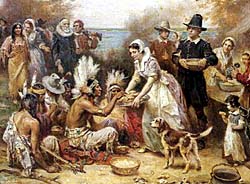
The Pilgrims left Plymouth, England, on September 6, 1620. Their destination? The New World. Although filled with uncertainty and peril, it offered both civil and religious liberty.
For over two months, the 102 passengers braved the harsh elements of a vast storm-tossed sea. Finally, with firm purpose and a reliance on Divine Providence, the cry of "Land!" was heard.Arriving in Massachusetts in late November, the Pilgrims sought a suitable landing place. On December 11, just before disembarking at Plymouth Rock, they signed the "Mayflower Compact" - America's first document of civil government and the first to introduce self-government.
After a prayer service, the Pilgrims began building hasty shelters. However, unprepared for the starvation and sickness of a harsh New England winter, nearly half died before spring. Yet, persevering in prayer, and assisted by helpful Indians, they reaped a bountiful harvest the following summer.The grateful Pilgrims then declared a three-day feast, starting on December 13, 1621, to thank God and to celebrate with their Indian friends. While this was not the first Thanksgiving in America (thanksgiving services were held in Virginia as early as 1607), it was America's first Thanksgiving Festival.
Pilgrim Edward Winslow described the Pilgrims' Thanksgiving in these words:"Our harvest being gotten in, our Governor sent four men on fowling [bird hunting] so that we might, after a special manner, rejoice together after we had gathered the fruit of our labors. They four in one day killed as much fowl as... served the company almost a week... Many of the Indians [came] amongst us and... their greatest King, Massasoit, with some ninety men, whom for three days we entertained and feasted; and they went out and killed five deer, which they brought... And although it be not always so plentiful as it was at this time with us, yet BY THE GOODNESS OF GOD WE ARE... FAR FROM WANT."
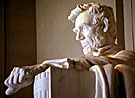
In 1789, following a proclamation issued by President George Washington, America celebrated its first Day of Thanksgiving to God under its new constitution. That same year, the Protestant Episcopal Church, of which President Washington was a member, announced that the first Thursday in November would become its regular day for giving thanks, "unless another day be appointed by the civil authorities." Yet, despite these early national proclamations, official Thanksgiving observances usually occurred only at the State level.Much of the credit for the adoption of a later ANNUAL national Thanksgiving Day may be attributed to Mrs. Sarah Joseph Hale, the editor of Godey's Lady's Book. For thirty years, she promoted the idea of a national Thanksgiving Day, contacting President after President until President Abraham Lincoln responded in 1863 by setting aside the last Thursday of November as a national Day of Thanksgiving. Over the next seventy-five years, Presidents followed Lincoln's precedent, annually declaring a national Thanksgiving Day. Then, in 1941, Congress permanently established the fourth Thursday of each November as a national holiday.
As Americans celebrate Thanksgiving each year, we hope they will retain the original gratefulness to God displayed by the Pilgrims and many other founding fathers , and remember that it is to those early and courageous Pilgrims that they owe not only the traditional Thanksgiving holiday but also the concepts of self-government, the "hard-work" ethic, self-reliant communities, and devout religious faith.
Your Thanksgiving Party: Day of Preparations
Are you in the mist of planning a Thanksgiving party? When it comes to Thanksgiving parties, a large amount of focus is placed on the planning and the preparation. While it is always advised that you plan and prepare for your party in advance, there are some things that just cannot be done until the last minute or, at least, the day of your party. That is why it may be a good idea to familiarize yourself with the last minute party preparations that you will have to make.
Depending on the size of your Thanksgiving party, you may need to make additional accommodations for your guests. These accommodations may likely include seating arrangements. If you need to set up additional tables and chairs, it may be a good idea to save that task until the day of your Thanksgiving party. This will prevent your home from being cluttered with additional tables and chairs; tables and chairs that may very well be in your way.
Since a Thanksgiving party is not complete without Thanksgiving decorations, there is a good chance that you will be decorating your home. If you do choose to decorate your home, for your Thanksgiving party, you may want to leave the decorations until the last minute. Of course, you can always put your decorations up early, if you want to, but there are a number of benefits to leaving them down until the day of your party. Those benefits include the lack of dust that will accumulate on those decorations and the less likelihood of them getting damaged before your party even begins.
If you decided to incorporate a Thanksgiving dinner into your Thanksgiving party, you may have prepared some of your foods and side dishes early. While you can prepare a number of dished in advance, there are some that need to be made at the last minute. Whether you are cooking a turkey or preparing a fresh salad, you may need to do your cooking on the day of, likely the morning of, your party. Even if you are just serving snacks and drinks at your party, you will want to wait until that day to start setting them out.
Another task that you may want to leave until the day of your party is the cleaning of your home. While you can also start to prepare your home a few days before your party is set to take place, there are some cleaning tasks that you may want to leave until the last few hours. These tasks may include a quick dusting, as well as a quick vacuum. Waiting until the day of your Thanksgiving party to sweep or vacuum your home will help to ensure that your home is as clean as it could possibly be.
In addition to the above mentioned tasks, you will likely find that there are number of other tasks that you may like to complete on the day of your Thanksgiving party. If you are currently in the planning stages, it may be a good idea to develop a party checklist or a party planning schedule. This may make it easier to decide what you should and shouldn’t save until the day of your Thanksgiving party. In addition to giving you a set schedule to follow, you will also likely find that planning your party ahead of time, even at the last minute, will make it easier for you to enjoy yourself, even before your Thanksgiving party begins.
How to Carve a Turkey
| To someone who is just learning to cook, this topic may seem like one of the hardest meals you will ever have to prepare. Needless to say, if you’re having a turkey there’s usually company involved which means a number of hungry people are relying on you to prepare a great meal. This can be very intimidating. Luckily we have all the information you need, in order to ensure a great meal for you, your friends and your family. In order to successfully carve a turkey, you will need to have the following pieces of equipment: • One warm serving platter • A pair of kitchen scissors • An electric knife or a large slicing knife (you may want to choose a manual knife since they provide more control than electric ones) • A small carving knife or fork for arranging and serving the meat Now that you have the equipment you need to carve the turkey, follow these steps in order to become a turkey carving expert: 1. Leave the turkey to sit 20-30 minutes after roasting and before carving. This will make the meat moister and easier to cut. 2. After the turkey has sat for the time indicated above, transfer the turkey onto a cutting board; this is where you will begin carving the turkey. 3. Remove the Leg: To do this, hold the drumstick firmly with your fingers and gently pull the meat away from the body of the turkey. While doing this, cut through the skin between the leg and the body. Next, cut through the joint joining the leg to the backbone. Then separate the drumstick and thigh by cutting downwards through the joint, until the knife hits the cutting board. 4. Slicing the Drumstick (Leg) Meat: Once you have detached the leg from the rest of the body, you will want to slice the meat. Hold the drumstick in an upright position and turn the drumstick in a circular motion while cutting downwards. This will produce tasty slices of meat which are approximately equal size. 5. Slicing the Thigh Meat: When slicing thigh meat, you want to hold it close to the plate and secure it so it does not move. For best results when cutting thigh meat, make sure your knife is parallel to the bone and cut downwards towards the plate in slow, steady motions. 6. Slicing the Breast Meat: Make a deep cut into the breast of the turkey towards the body frame, as close to the wing as you can. Starting at the front of the turkey (about halfway up the breast) start cutting downwards, parallel to the cut you made to the wing. Only cut enough meat as you think necessary for the amount of people. Uncut meat will stay fresher longer. 7. Serve the Turkey: place all the slices of meat in an attractive manner on a large platter and serve to your guests. * Note: Remove stuffing from the turkey either by taking it out of the hole made where the leg was removed or by making a new hole in the neck and taking it out from there. About the author: Mike Lansing is a retired chef who spent most of his time as a Head Chef in New Orleans after training in France. He spends his free time cooking for family and friends, as well as serving as a contributing editor for CookingSchools101.com which offers information onCulinary Schools and obtaining a Culinary Degree for those wishing to enter the trade. |
Cajun Cornbread Stuffing
Ingredients
- 2 cups unbleached all-purpose flour
- 2 cups stone ground cornmeal
- 2 tablespoons baking powder
- 1 teaspoon salt
- 4 tablespoons white sugar
- 5 eggs, beaten
- 6 tablespoons butter, melted
- 3 cups buttermilk
- 2 tablespoons salt
- 2 teaspoons ground white pepper
- 2 teaspoons ground black pepper
- 2 teaspoons cayenne pepper
- 2 teaspoons onion powder
- 4 teaspoons dried oregano
- 2 teaspoons dried thyme
- 6 tablespoons chopped fresh basil
- 4 bay leaves
- 1 cup minced onion
- 1 cup chopped green onions
- 1 cup chopped parsley
- 2 cups chopped red bell pepper
- 2 green chile peppers, chopped
- 2 tablespoons minced garlic
- 1 cup butter
- 2 cups chicken broth
- 1 tablespoon hot pepper sauce
- 2 cups evaporated milk
- 7 eggs, beaten
Directions
- To Make Cornbread: Preheat oven to 375 degrees F (190 degrees C). Butter a 13x9 inch pan.
- Combine the flour, cornmeal, baking powder, 1 teaspoon salt, and sugar, and mix well.
- Combine the 5 eggs, 6 tablespoons melted butter, and buttermilk. Add wet to dry while mixing on low with a mixer. Mix just until no dry ingredients remain. Pour into prepared pan.
- Bake until top is browned and a toothpick comes out clean, about 55 minutes. Allow to cool completely.
- To Make Stuffing: In a small bowl combine the 2 tablespoons salt with the white pepper, black pepper, cayenne pepper, onion powder, oregano, thyme, basil, and bay leaves.
- In another bowl combine the minced onions, green onions, parsley, red or green peppers, chili peppers, and garlic.
- Melt 1 cup butter in a large fry pan. Add the spices and cook for a few minutes. Add the vegetables and cook about 5 minutes. Do not allow the vegetables to brown. Add the stock and Tabasco. Stir and cook 5 minutes more. Crumble the cornbread into the skillet and mix. Add the evaporated milk and 7 eggs OFF THE HEAT. Make sure to stir well when adding the eggs. Return to low heat and cook, stirring, for about 2 minutes. Remove the bay leaves. Place stuffing in a bowl and cover. Cool before stuffing turkey.
Cooking Turkey using a Cheesecloth Cover
- Ingredients (for a 14 pound (+/-) Turkey)
- 1 large (bunch) fresh parsley
- 1 large (bunch) fresh sage
- 1 large (bunch) fresh thyme
- 2 teaspoon(s) kosher salt
- 1 teaspoon(s) table salt, (can be substituted for above ingredient)
- 1 teaspoon(s) coarsely ground black pepper
- 1 lemon, cut in half
- 2 small onions, cut into quarters, and other vegetables to your taste
- 1 cup(s) dry white wine
- 1 can(s) (14 1/2 ounces, 1 3/4 cups) chicken broth
- Heat the butter, wine, squeezed lemon, in a small saucepan until the butter is melted. Figure out the size of cheesecloth you need to make about a 4-layer covering for your turkey. Soak the cheesecloth in the wine/butter/lemon mix.
- Remove the neck and giblets (gizzard, heart,liver) from the turkey. If you've never cooked a turkey before, you'll find these by reaching into the cavities of the turkey. Typically the neck is in one side and a bag of parts in the other. If the turkey's legs are held together by wire, slip them out, remove the innards, then put the legs back in the wire. Keep these to make some broth for your gravy (except for the liver, the really dark dark meat.). Rinse your turkey and pat dry with paper towels.
- Heat the oven to 450. Put the turkey on a rack in a roasting pan, breast side up. Rub entire turkey with soft butter. Put mix of vegetables, a quartered onion, chicken broth, and some salt and pepper on the bottom of the turkey pan . Put the turkey rack over the vegetable mix to space the turkey above the mix.
- Stuff with your favorite stuffing mix, or homemade stuffing( but don't over-stuff). Sprinkle the top with salt, pepper, and all the other spices.
- Take the cheesecloth out of the wine/butter/lemon mix, drain the cheesecloth out while leaving moist, and lay it over the turkey, covering it completely.
- Put the turkey into the oven , legs toward the back if your pan will fit that way.
- Every 30 minutes baste the turkey with the wine/butter/lemon mix.
- In the meantime, put the turkey neck and gizzards in a saucepan and cover with 6 cups of water or so. Add a half a carrot, half an onion, stalk of celery, and some salt and pepper. Bring to a simmer, cover partway, and let it cook for a few hours to get some good broth for your gravy.
- Reduce the heat to 350 and cook another couple of hours. The USDA has an informative page on how to thaw and cook turkeys or check the cooking directions on your turkey. It all varies depending on how large a turkey you have and what temperature you decide to use. Use a meat thermometer at the end to verify.
- About an hour before you think the turkey will be done, take it out of the oven and remove the cheesecloth. Baste again and put the uncovered turkey back in the oven and baste again after 30 more minutes. At this point you may cover the turkey legs and wings with aluminum foil to prevent overcooking of these parts.
- Check the temperature at the thickest part of the thigh with a meat thermometer. The leg should register 170-175F and one in the breast 160-165. Let the turkey sit 30 minutes before carving.
- This finished turkey should be moist and very tasty....
High Altitude Cooking Info
At high altitude, the air density is lower than at sea level.
This causes two basic problems:
First at higher elevations, water boils at a lower temperature, thus requiring you to cook longer once you hit boiling (and the time it takes you to prepare your recipe). For example, the water's not as hot in Denver as it is in Boston, even boiling. This is the reason, when cooking in the mountains, your coffee and hot chocolate can be merely tepid, even though the water was boiling.
Second baked goods tend to rise faster, requiring a change in the proportion of ingredients used in leavened foods (such as breads and cakes). Sometimes, you may need to adjust the baking temperature in your oven as well!
However, changes in altitude do not affect oven temperatures.
Note: Since baking items often rise quicker at higher altitudes, you may want to increase the oven temperature. So, at elevations over 3500 feet, the oven temperature for batters and doughs should be 25 degrees Fahrenheit higher than the temperature used at sea level. Proofing time for yeast breads should be reduced.
As you may know air pressure at sea level is roughly 15 pounds per square inch. Since there are a few miles of air above us, lots of stuff (molecules) in the air is all pulled to the earth by gravity. For example, when you go up in the atmosphere a mile (5,280 ft.) you have much less air pressure (i.e. much less air pressing down on you). The same is true for being underwater: the closer to the surface you are, the less pressure you feel in your ears; the deeper you go, the greater the pressure. Any reaction that causes expansion (like giving off gases as part of a chemical reaction), will happen slower the closer one is to sea level, since the air pressure surrounding the reaction is greater. But as one goes up in the atmosphere, the surrounding air pressure is less. Therefore expanding processes (like rising bread) would seem to happen faster and maybe more profusely.
Boiling:
In general, then, if you are making something that needs to be boiled, the cooking process will take longer at high altitudes than at sea level. At as low as 5,000 feet (1,500 meters), the boiling point of water has changed enough to change cooking times significantly. For example, expect rice cooked at 5,000 feet (1,500 meters) to take 25-30 minutes instead of 20-25 minutes of simmering before the water is absorbed and the rice is done.
Baking:
For any baked goods that rise (yeast breads, cakes or breads made with baking powder, etc.), it is important to adjust the recipe so that the rapid rise time doesn't make the resulting bread or cake too dry.
This can be done as follows:
For Yeast Breads: Yeast breads rise more quickly at high altitudes, so be sure to watch your dough carefully and judge the rise time by the change in the dough's bulk, not by the amount of time it takes.
For Recipes Using Baking Powder:
Don't overbeat the eggs. Overbeating adds too much air to the bread or cake.
Raise the baking temperature slightly; the faster cooking time will keep the recipe from rising too much.
Decrease the amount of baking powder slightly; this also prevents the recipe from rising too much.
Always grease your baking pans thoroughly, as cakes and breads tend to stick more when they are baked at high altitudes.
Read the Directions!
When all else fails, read the directions! If you're baking something you've baked for years, take a close look to find any instructions about preparing your food at a higher elevation. Usually, there will be a note (in fine print) stating what to add or delete from the recipe to make your food come out just like you've always enjoyed it!
Baking Cakes at High Altitude
Most cake recipes for sea level need no modification up to the altitude of 3,000 feet. Above that, it is often necessary to adjust recipes slightly. Usually, a decrease in leavening or sugar (or both) and an increase in liquid are needed.
Each or all of these adjustments may be required for every recipe is different in its balance of ingredients. Only repeated experiments with each recipe can give the most successful proportions to use. Simply use the guide below to adjust your recipe as needed. Where two amounts appear in the table, the smaller adjustment should be tried first. Then if the cake still needs improvement, the larger adjustment can be used the next time.
Adjustment for 3000+ feet:
Add an additional egg to rich cakes to help keep them from falling.
Increase flour: For each cup of flour increase by 1 tblsp
Decrease fat: For each cup of fat, decrease 1 to 2 tblsp.
Reduce baking powder: For each tsp., decrease 1/8 tsp to 1/4 tsp
Reduce sugar: For each cup, decrease 0 to 1 tblsp.
Increase liquid: For each cup, add 2 to 4 tblsp.
Increasing oven temperature 15 to 25°F more will help set the batter before cells formed by leavening gases expand to much.
Here I found more information and just thought I would add to what I already have. Some of it's a repeat, but useful none the less.
Canning
Time or temperature must be increased in order to kill heat-resistant bacteria. A steam pressure canner must be used for canning meats and vegetables. Follow high altitude directions available from all County Extension Offices.
Deep-Fat-Frying
When deep-fat-frying, lower the temperature of the oil about 15 degrees here to prevent food from over-browning on the outside while being under-cooked on the inside. Baking casseroles and meats require no changes.
Cake From Scratch
Are you ready for the real challenge? A cake made from scratch! If not, continue to use box mixes and follow the high altitude suggestions. For those with sense of adventure, read on.
Above 3,000 feet in altitude the lower atmospheric pressure will affect cakes. There may be excessive rising which stretches the cell structure of the cake, making the texture coarse, or the cells can break before they set causing the cake to fall. This can usually be corrected by decreasing the amount of leavening agent and by increasing the baking temperature 15 degrees to 25 degrees. Because water in the batter evaporates quicker here, there is more of a concentration of sugar in the recipe which weakens the cell structure. Therefore we usually recommend decreasing sugar and increasing liquid. The cakes most likely to fall are those wonderful sweet, sticky, gooey rich ones. These super rich cakes may require reducing shortening by 1 or 2 tablespoons or by adding an extra egg. Some recipes will work fine without changes, others will take some experimenting. Here's a table* to give you a starting point.
Adjustment
3,000 ft.
5,000 ft.
7,000 ft.
* Table from High Altitude Food Preparation- pamphlet 41
Angel food and sponge cakes use air for leavening. It comes from beating air into the eggs. Beat only until they form peaks that fall over - not stiff and dry, which cause the cells to collapse. Again, use less sugar and more flour and a higher baking temperature. We're often asked why we don't just add more flour and water to cake recipes like they do with box mixes. Isn't this more complicated. Have you ever tried to take some of the leavening or sugar out of a box mix? The only option on a box mix is to strengthen the cell walls by adding flour and water.
High-altitude conversion tips
To convert standard recipes into those which can be used for high-altitude baking:
Use 5% more flour - to disperse the leavening action and slow down the rapid rise of the cake.
Use 20% more water - to counterbalance the rapid evaporation of liquids at high altitudes and the extra flour added to the cake batter.
Bake about 25 degrees higher - to help "set" the cake's crust.
Reduce baking time about 20% - prevent overbaking at the higher temperature.
Fill pans 1/3 to no more than 1/2 full - to avoid batter overflow caused by rapid cake expansion.
Use cold water and large cold eggs - to give cake extra strength.
Generously grease and flour cake pans - to prevent cake from sticking.
Since high altitude cakes rise higher, remove top oven rack to prevent cake from sticking to it.
Have oven calibrated by a serviceman periodically, since some thermostats are affected by altitude.
High-altitude cookie adjustment
Only cookies with lots of chocolate, nuts or dates need adjustment: reduce baking powder/soda by 1/2.
At very high altitudes, a slight reduction of sugar may help.
This is the fun part. Since I got the information from multiple places, they all have a hint as to what is best. At best this information will help you. Trial and error may be the thing for some baking.
Thanks to the folks at the Colorado State University (Boulder), the University of Southern Colorado (Pueblo), the Colorado State County Extension Office, Safeway Stores and the USDA for there help with this section. Also, "The New High Altitude Cookbook" by Beverly M. Anderson and Donna M. Hamilton.
For more information on baking at high altitudes, ask for "High Altitude Food Preparation" Pamphlet 41 from your Colorado State County Extension Office. There is no charge. It will also list other high altitude recipe books available from Colorado State Cooperative Extension.
One of the things I enjoy with running this website. On Feb 16, 2007 I received an email that has real world adjustments.
I am located at 8000 feet above the ocean and have been baking and cooking successfully way up here for 26 years, 15 professionally.
Leavening agents, just need a smidgen of a decrease (1/8 t.) from about 400-9500 feet. Above that then yes, decrease by 1/4 t
Sugar: I have yet to decrease sugar by more than 1 T per cup, actually I just measure it to just below the cup line in the measuring device.
Liquid: from many that I have met or spoken to, those below about 4500 feet inform me that there are no true adjustments. However adding up to 4 T more of liquid without adding any extra flour could result in a soggy product. I suggest adding approx. 1-2 T per cup and a tad more above 9500 feet.
1-2 T of additional flour is a definite adjustment, especially for cookies otherwise they will become much too flat rather than nicely rounded with sustenance.
My info and knowledge is not based on scientific studies, but rather on everyday experiences in the kitchen.
I hope this info helps.
Randi Levin
The Muffin Lady Inc.
This causes two basic problems:
First at higher elevations, water boils at a lower temperature, thus requiring you to cook longer once you hit boiling (and the time it takes you to prepare your recipe). For example, the water's not as hot in Denver as it is in Boston, even boiling. This is the reason, when cooking in the mountains, your coffee and hot chocolate can be merely tepid, even though the water was boiling.
Second baked goods tend to rise faster, requiring a change in the proportion of ingredients used in leavened foods (such as breads and cakes). Sometimes, you may need to adjust the baking temperature in your oven as well!
However, changes in altitude do not affect oven temperatures.
Note: Since baking items often rise quicker at higher altitudes, you may want to increase the oven temperature. So, at elevations over 3500 feet, the oven temperature for batters and doughs should be 25 degrees Fahrenheit higher than the temperature used at sea level. Proofing time for yeast breads should be reduced.
As you may know air pressure at sea level is roughly 15 pounds per square inch. Since there are a few miles of air above us, lots of stuff (molecules) in the air is all pulled to the earth by gravity. For example, when you go up in the atmosphere a mile (5,280 ft.) you have much less air pressure (i.e. much less air pressing down on you). The same is true for being underwater: the closer to the surface you are, the less pressure you feel in your ears; the deeper you go, the greater the pressure. Any reaction that causes expansion (like giving off gases as part of a chemical reaction), will happen slower the closer one is to sea level, since the air pressure surrounding the reaction is greater. But as one goes up in the atmosphere, the surrounding air pressure is less. Therefore expanding processes (like rising bread) would seem to happen faster and maybe more profusely.
Boiling:
In general, then, if you are making something that needs to be boiled, the cooking process will take longer at high altitudes than at sea level. At as low as 5,000 feet (1,500 meters), the boiling point of water has changed enough to change cooking times significantly. For example, expect rice cooked at 5,000 feet (1,500 meters) to take 25-30 minutes instead of 20-25 minutes of simmering before the water is absorbed and the rice is done.
Baking:
For any baked goods that rise (yeast breads, cakes or breads made with baking powder, etc.), it is important to adjust the recipe so that the rapid rise time doesn't make the resulting bread or cake too dry.
This can be done as follows:
For Yeast Breads: Yeast breads rise more quickly at high altitudes, so be sure to watch your dough carefully and judge the rise time by the change in the dough's bulk, not by the amount of time it takes.
For Recipes Using Baking Powder:
Don't overbeat the eggs. Overbeating adds too much air to the bread or cake.
Raise the baking temperature slightly; the faster cooking time will keep the recipe from rising too much.
Decrease the amount of baking powder slightly; this also prevents the recipe from rising too much.
Always grease your baking pans thoroughly, as cakes and breads tend to stick more when they are baked at high altitudes.
Read the Directions!
When all else fails, read the directions! If you're baking something you've baked for years, take a close look to find any instructions about preparing your food at a higher elevation. Usually, there will be a note (in fine print) stating what to add or delete from the recipe to make your food come out just like you've always enjoyed it!
Baking Cakes at High Altitude
Most cake recipes for sea level need no modification up to the altitude of 3,000 feet. Above that, it is often necessary to adjust recipes slightly. Usually, a decrease in leavening or sugar (or both) and an increase in liquid are needed.
Each or all of these adjustments may be required for every recipe is different in its balance of ingredients. Only repeated experiments with each recipe can give the most successful proportions to use. Simply use the guide below to adjust your recipe as needed. Where two amounts appear in the table, the smaller adjustment should be tried first. Then if the cake still needs improvement, the larger adjustment can be used the next time.
Adjustment for 3000+ feet:
Add an additional egg to rich cakes to help keep them from falling.
Increase flour: For each cup of flour increase by 1 tblsp
Decrease fat: For each cup of fat, decrease 1 to 2 tblsp.
Reduce baking powder: For each tsp., decrease 1/8 tsp to 1/4 tsp
Reduce sugar: For each cup, decrease 0 to 1 tblsp.
Increase liquid: For each cup, add 2 to 4 tblsp.
Increasing oven temperature 15 to 25°F more will help set the batter before cells formed by leavening gases expand to much.
Here I found more information and just thought I would add to what I already have. Some of it's a repeat, but useful none the less.
Canning
Time or temperature must be increased in order to kill heat-resistant bacteria. A steam pressure canner must be used for canning meats and vegetables. Follow high altitude directions available from all County Extension Offices.
Deep-Fat-Frying
When deep-fat-frying, lower the temperature of the oil about 15 degrees here to prevent food from over-browning on the outside while being under-cooked on the inside. Baking casseroles and meats require no changes.
Cake From Scratch
Are you ready for the real challenge? A cake made from scratch! If not, continue to use box mixes and follow the high altitude suggestions. For those with sense of adventure, read on.
Above 3,000 feet in altitude the lower atmospheric pressure will affect cakes. There may be excessive rising which stretches the cell structure of the cake, making the texture coarse, or the cells can break before they set causing the cake to fall. This can usually be corrected by decreasing the amount of leavening agent and by increasing the baking temperature 15 degrees to 25 degrees. Because water in the batter evaporates quicker here, there is more of a concentration of sugar in the recipe which weakens the cell structure. Therefore we usually recommend decreasing sugar and increasing liquid. The cakes most likely to fall are those wonderful sweet, sticky, gooey rich ones. These super rich cakes may require reducing shortening by 1 or 2 tablespoons or by adding an extra egg. Some recipes will work fine without changes, others will take some experimenting. Here's a table* to give you a starting point.
Adjustment
3,000 ft.
5,000 ft.
7,000 ft.
| Adjustment | |||
| Reduce baking powder, for each tsp., decrease | 1/8 tsp. | 1/8-1/4 tsp. | 1/4 tsp. |
| Reduce sugar, for each cup, decrease | 0-1 Tbsp. | 0-2 Tbsp. | 1-3 Tbsp. |
| Increase liquid, for each cup, add | 1-2 Tbsp. | 2-4 Tbsp. | 3-4 Tbsp. |
* Table from High Altitude Food Preparation- pamphlet 41
Angel food and sponge cakes use air for leavening. It comes from beating air into the eggs. Beat only until they form peaks that fall over - not stiff and dry, which cause the cells to collapse. Again, use less sugar and more flour and a higher baking temperature. We're often asked why we don't just add more flour and water to cake recipes like they do with box mixes. Isn't this more complicated. Have you ever tried to take some of the leavening or sugar out of a box mix? The only option on a box mix is to strengthen the cell walls by adding flour and water.
High-altitude conversion tips
To convert standard recipes into those which can be used for high-altitude baking:
Use 5% more flour - to disperse the leavening action and slow down the rapid rise of the cake.
Use 20% more water - to counterbalance the rapid evaporation of liquids at high altitudes and the extra flour added to the cake batter.
Bake about 25 degrees higher - to help "set" the cake's crust.
Reduce baking time about 20% - prevent overbaking at the higher temperature.
Fill pans 1/3 to no more than 1/2 full - to avoid batter overflow caused by rapid cake expansion.
Use cold water and large cold eggs - to give cake extra strength.
Generously grease and flour cake pans - to prevent cake from sticking.
Since high altitude cakes rise higher, remove top oven rack to prevent cake from sticking to it.
Have oven calibrated by a serviceman periodically, since some thermostats are affected by altitude.
High-altitude cookie adjustment
Only cookies with lots of chocolate, nuts or dates need adjustment: reduce baking powder/soda by 1/2.
At very high altitudes, a slight reduction of sugar may help.
This is the fun part. Since I got the information from multiple places, they all have a hint as to what is best. At best this information will help you. Trial and error may be the thing for some baking.
Thanks to the folks at the Colorado State University (Boulder), the University of Southern Colorado (Pueblo), the Colorado State County Extension Office, Safeway Stores and the USDA for there help with this section. Also, "The New High Altitude Cookbook" by Beverly M. Anderson and Donna M. Hamilton.
For more information on baking at high altitudes, ask for "High Altitude Food Preparation" Pamphlet 41 from your Colorado State County Extension Office. There is no charge. It will also list other high altitude recipe books available from Colorado State Cooperative Extension.
One of the things I enjoy with running this website. On Feb 16, 2007 I received an email that has real world adjustments.
I am located at 8000 feet above the ocean and have been baking and cooking successfully way up here for 26 years, 15 professionally.
Leavening agents, just need a smidgen of a decrease (1/8 t.) from about 400-9500 feet. Above that then yes, decrease by 1/4 t
Sugar: I have yet to decrease sugar by more than 1 T per cup, actually I just measure it to just below the cup line in the measuring device.
Liquid: from many that I have met or spoken to, those below about 4500 feet inform me that there are no true adjustments. However adding up to 4 T more of liquid without adding any extra flour could result in a soggy product. I suggest adding approx. 1-2 T per cup and a tad more above 9500 feet.
1-2 T of additional flour is a definite adjustment, especially for cookies otherwise they will become much too flat rather than nicely rounded with sustenance.
My info and knowledge is not based on scientific studies, but rather on everyday experiences in the kitchen.
I hope this info helps.
Randi Levin
The Muffin Lady Inc.
Subscribe to:
Posts (Atom)